N8 · aerial repairs & installation
TV aerial repairs and installation in Crouch End
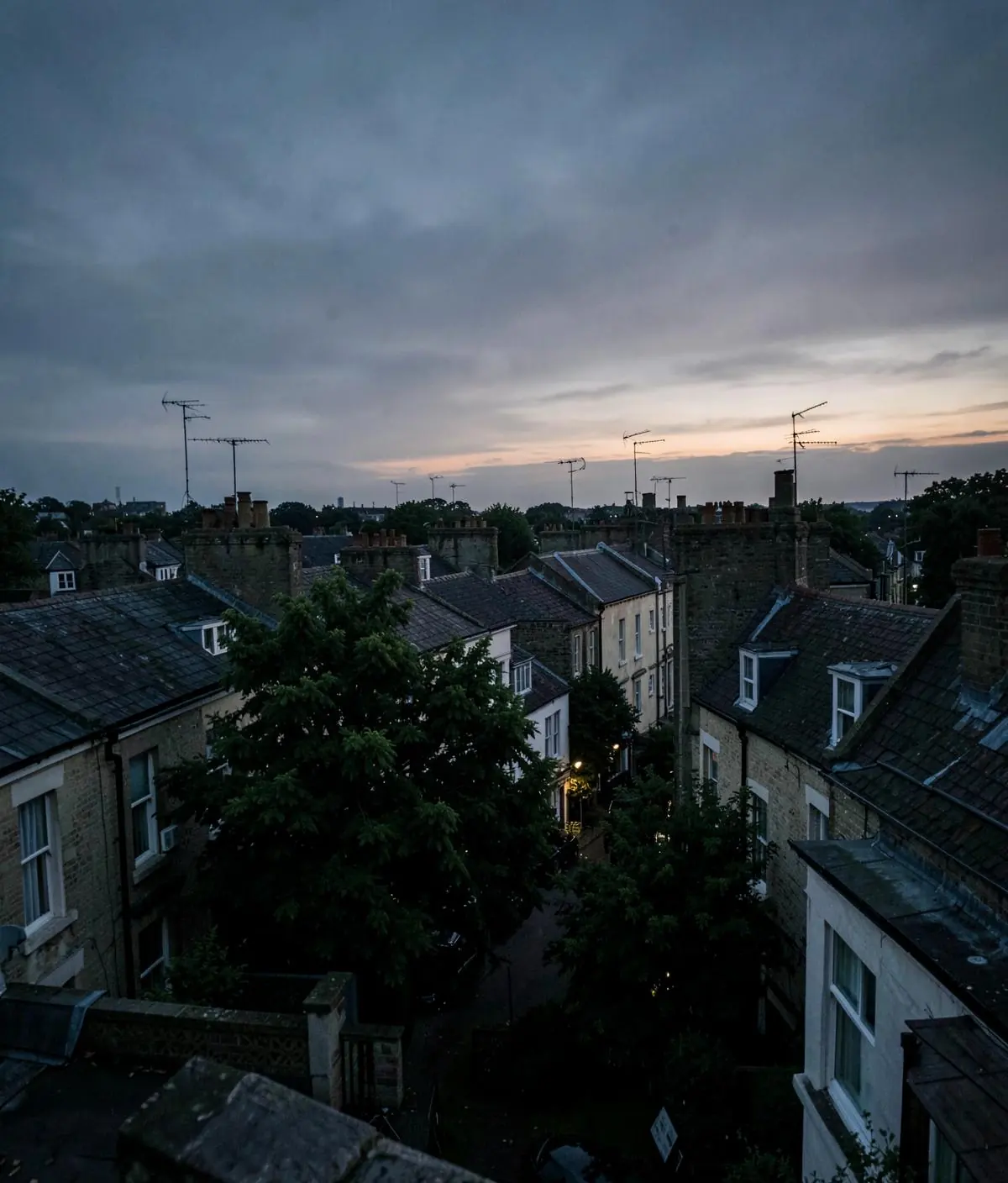
Crouch End sits in a bowl below Highgate and Muswell Hill, and that dip is behind a good share of the reception problems we're called to here.
- N8
- Same-day repairs
- Established 1997
N8
Local postcode
Working in the dip at Crouch End
Crouch End's low-lying position means many roofs look up at surrounding high ground rather than out over it. Signal can be perfectly usable, but the margin is often thinner than the postcode suggests, so aerial choice and mounting height matter more here than in most of our patch.
Where the path is genuinely obstructed we look at higher mounting, a higher-gain aerial, or occasionally a different transmitter path altogether. We take readings before recommending an amplifier, because adding gain to a noisy signal makes freezing worse rather than better.
The Victorian and Edwardian terraces here are mostly straightforward to work on, with plenty of them converted into flats where sorting the internal distribution delivers the biggest single improvement.
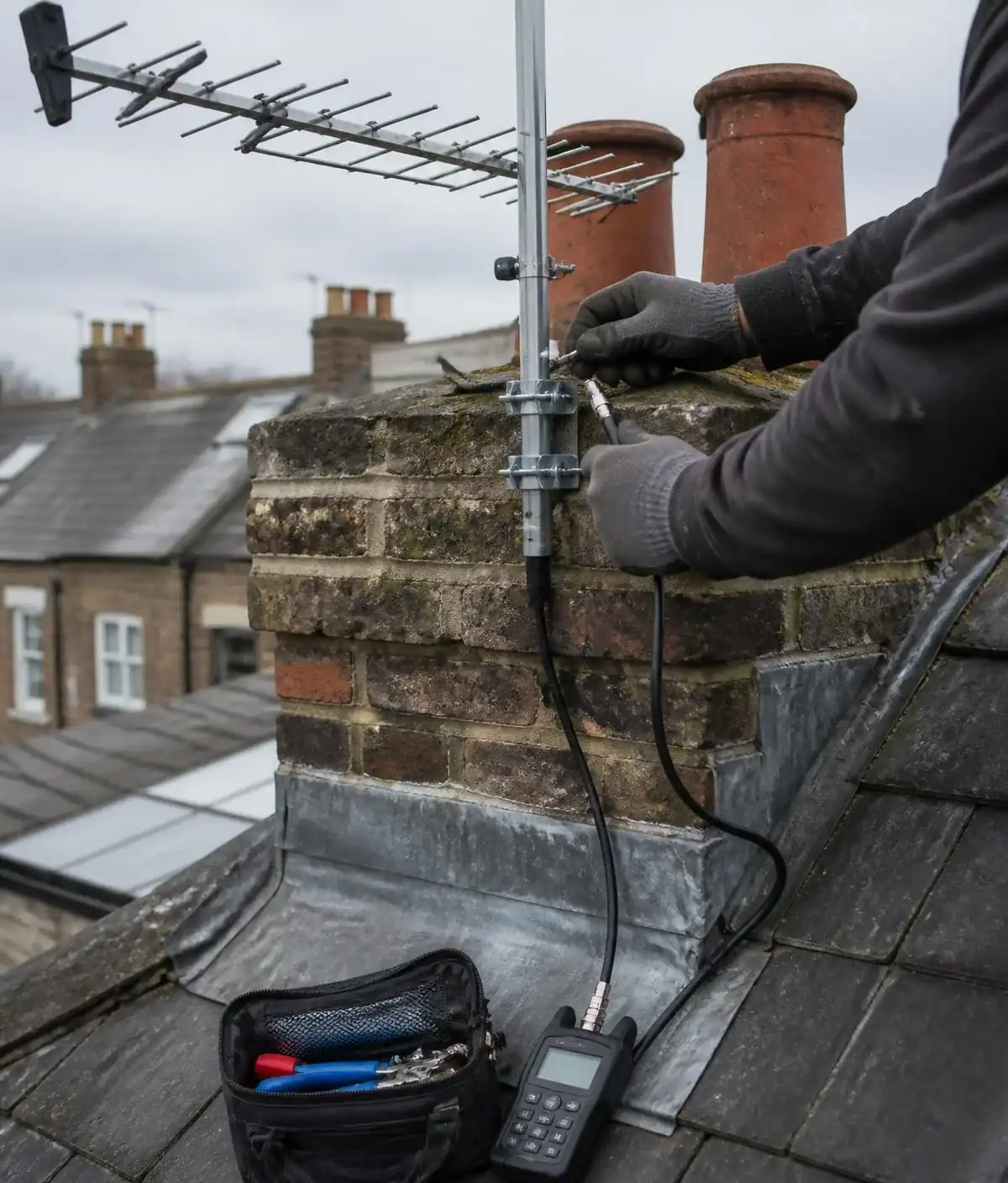
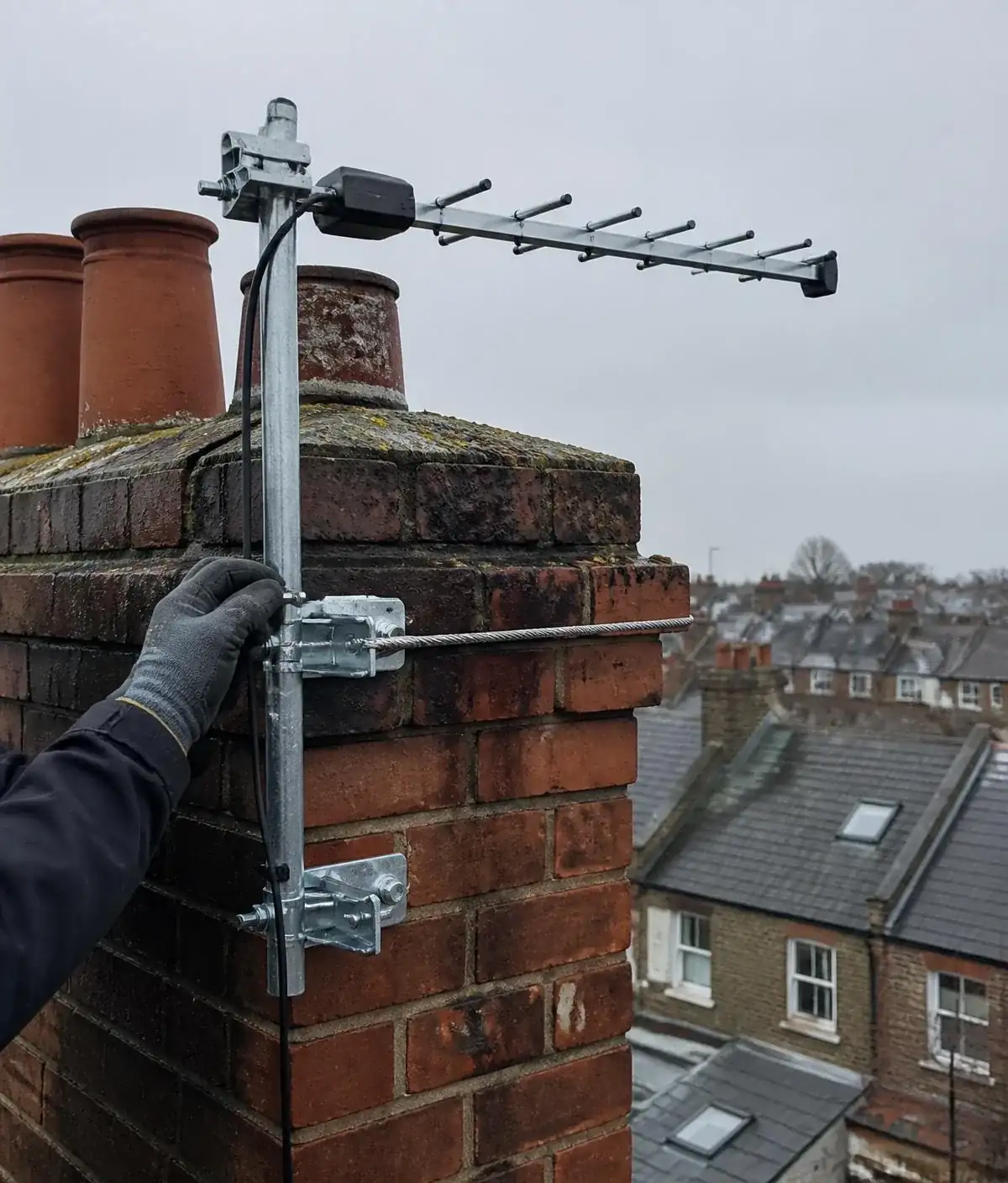
Aerial work in Crouch End
What careful roof work looks like in Crouch End
Streets and pockets we work in
Familiar ground in Crouch End
- Crouch End Broadway
- Park Road
- Tottenham Lane
- Crouch Hill
- Weston Park
- Elder Avenue
- Coolhurst Road
- Hornsey Lane
Aerial repairs and everything else we do here
Aerial repairs
Storm damage, snapped elements, sagging poles and corroded connections put right.
Satellite repairs
No signal, rain fade and failed LNBs traced and repaired on the first visit.
TV signal problems
Pixelation, missing channels and picture that drops at the same time each evening.
TV aerial installation
New wideband or high-gain aerials sited for a clean Crystal Palace signal.
Extra TV points
New aerial or satellite outlets in bedrooms, kitchens, lofts and garden rooms.
Satellite dish installation
New dishes aligned on a meter, from single feeds to multi-room quad LNBs.
Foreign language satellite
European, Arabic, Turkish, Asian and Polish satellite systems installed and aligned.
TV wall mounting
Televisions mounted level and secure, with cables hidden inside the wall.
Home WiFi installation
Dead spots surveyed and fixed properly, not papered over with plug-in extenders.
CCTV installation & repair
CCTV repairs, camera and recorder faults fixed, plus new systems positioned for useful footage.
Smart home in Crouch End
Smart home security
Cameras, alarms, intercom and door access working together, viewable from anywhere.
Whole-home control
Lighting, blinds, heating, music, TV and security on one app and one set of keypads.
Roofs, streets and reception in Crouch End
What Crouch End property means for your aerial
Crouch End sits in a natural bowl below Highgate to the east and Muswell Hill to the north, with the Broadway, Tottenham Lane and Crouch Hill forming the main spine and Victorian and Edwardian terraces climbing the slopes on every side. The dip itself is the defining feature for reception work — roofs here often look up at surrounding high ground rather than out over it, which thins the signal margin more than the postcode alone would suggest. Housing stock is predominantly bay-fronted terraces, many converted into flats, with solid brick chimney stacks still doing useful service as mounting points, and rear gardens along streets like Elder Avenue and Coolhurst Road giving reasonable, if sometimes overlooked by trees, satellite sightlines.
Because the whole area sits lower than its surrounding neighbourhoods, a basic aerial that would perform adequately on flatter ground in, say, Finchley or Southgate can be genuinely marginal here, particularly on the streets closest to the base of the bowl near Hornsey Lane and Crouch Hill. We don't default to adding an amplifier when a reading comes back weak, since boosting a signal that's already carrying noise from the obstructed path simply amplifies the fault along with the picture — the better fix is usually a higher-gain aerial, a slightly higher mounting position clear of a neighbouring roofline, or occasionally reconsidering which transmitter the property should actually be aimed at.
Many of the terraces here were converted into two or three flats decades ago, and the internal cabling reflects that history — a single feed split several times over the years as each flat was let out, with connections added at whatever point was convenient rather than planned as a system. When we're called to a fault in one flat of a converted house, the actual cause is very often the shared cabling rather than the aerial itself, and replacing ad hoc splitters with a single powered distribution point at the entry to the building resolves problems in flats that were never even reporting an issue.
Satellite dishes for Sky and freesat need a sightline towards 28.2 degrees east, and on Crouch End's terraces that's usually achievable from a rear wall or gable, though mature trees in the long gardens off Coolhurst Road and around Priory Park can sit directly in that path during summer months. We check the line at the time of year it matters most for the household's viewing habits, and where a garden position is blocked we look at raising the mount above the fence line or moving to a chimney-adjacent bracket instead.
Aerial repairs we do most in Crouch End
Crouch End faults and what actually causes them
Picture breaking up in a flat within a converted terrace
an old, uncontrolled splitter arrangement shared across several flats rather than a fault with any individual television
Reception noticeably weaker than a similar house in a neighbouring area
Crouch End's low-lying position reducing the natural signal margin against Highgate and Muswell Hill
Freezing that gets worse after an amplifier was fitted
gain added to a signal that already carried noise from an obstructed path, amplifying the fault rather than fixing it
Satellite signal dropping out for part of the year
seasonal tree growth in a long rear garden moving into the sightline to 28.2 degrees east
Aerial bracket rusted or loose after many years
an older galvanised fixing reaching the end of its working life on an exposed chimney stack
Installation notes for Crouch End
- Higher-gain aerials specified rather than amplifiers as a default response to Crouch End's naturally thinner signal margin
- Mounting height chosen to clear neighbouring rooflines where the bowl-like topography shadows a lower position
- Shared cabling in converted terraces replaced with a single powered distribution point rather than serial splitters
- Satellite sightlines checked against seasonal tree growth rather than only current conditions
- Readings taken before any amplifier is fitted, since gain on a noisy signal worsens freezing rather than curing it
Crouch End questions
Crouch End answers, not call-centre scripts
Is reception poor in Crouch End?
Not poor, but often with less margin than the hills nearby. That's a solvable problem with the right aerial at the right height, and it's why we always meter first.
Will an amplifier fix my freezing picture?
Only if the signal is clean and simply weak. If it's noisy, amplification makes it worse — the readings tell us which situation you're in.
Do you cover Hornsey and Stroud Green too?
Yes, along with the N8 streets around the Broadway and up Crouch Hill.
Why is reception in Crouch End worse than nearby areas on higher ground?
Crouch End sits in a dip below both Highgate and Muswell Hill, so many roofs look up at rising ground rather than having an open path to Crystal Palace. It's usually still workable, but the margin is thinner, so aerial choice and mounting height matter more here than in most of our patch.
Will adding an amplifier fix a weak signal in my flat?
Not on its own, and it can make things worse if the underlying signal already carries interference, since an amplifier increases the noise along with the picture. We take readings first and only recommend amplification where it will genuinely help.
My converted house has several flats — could the fault be shared cabling?
Very often, yes. Many Crouch End terraces were split into flats with the aerial cabling added to over the years rather than designed as one system, so a fault in one flat frequently traces back to shared splitters rather than that flat's own equipment.
Can trees really affect my satellite signal by season?
Yes, particularly in the longer gardens off streets like Coolhurst Road, where a sightline that's clear in winter can be partly blocked by full summer leaf cover. We check the path with that in mind so the position chosen works year-round.
Nearby areas
We cover the same streets for security work too — CCTV repairs and installation in Crouch End.
Free advice, no obligation
Describe the fault. We'll tell you what your Crouch End aerial needs.
Speak to an engineer on WhatsApp — Mon–Sat 8am–8pm, Sun 9am–5pm. We cover North & North West London and most jobs are finished in a single visit.