
NW6 · aerial repairs & installation
TV aerial repairs and installation in Kilburn
Kilburn's mix of Victorian terraces, mansion flats and estate blocks means we move between chimney work, communal systems and internal distribution in the same week.
- NW6
- Same-day repairs
- Established 1997
NW6
Local postcode
Mixed housing, mixed systems in Kilburn
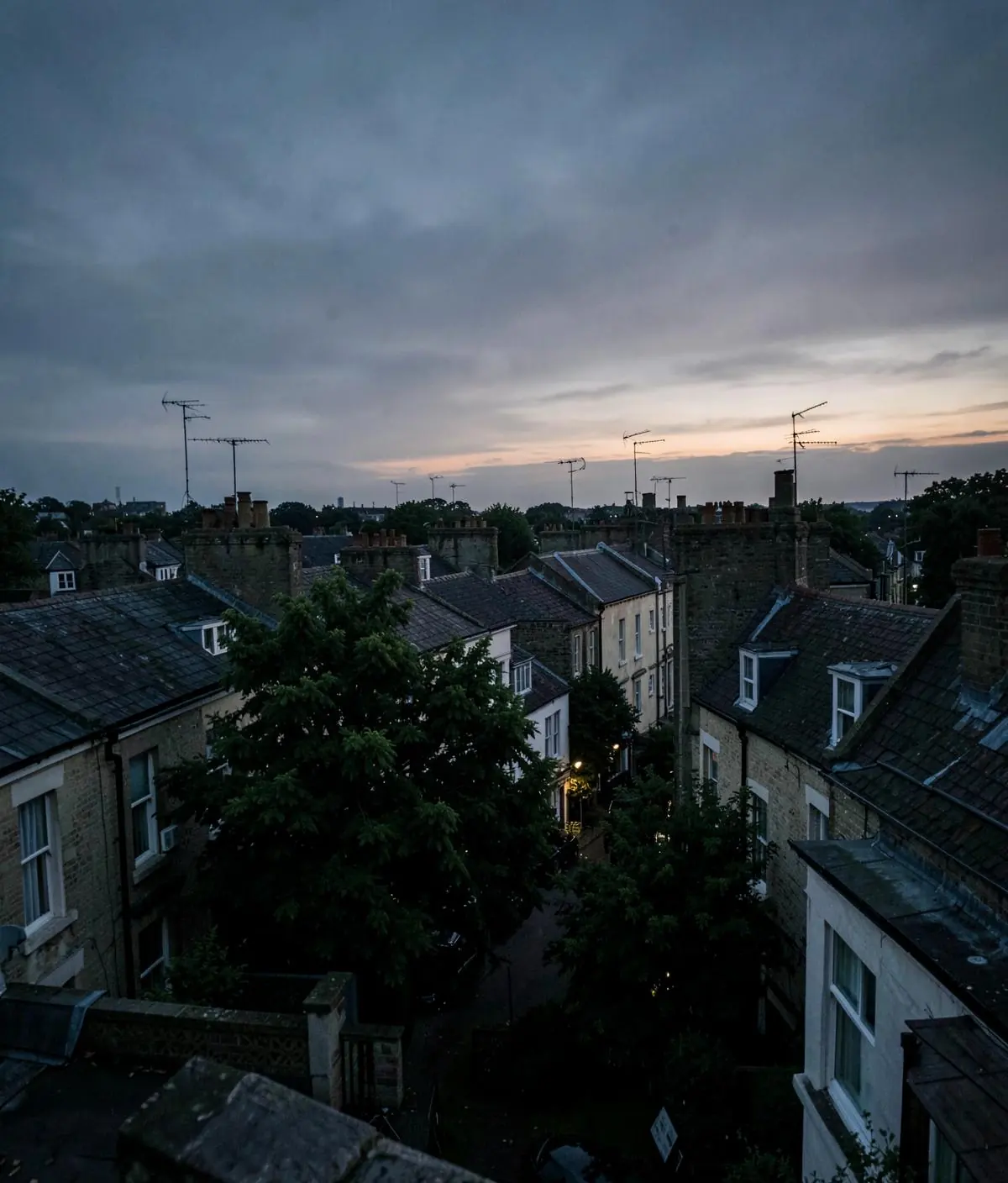
Along the High Road you get purpose-built mansion flats over shops, where the communal feed and the internal wiring are usually both due attention. On the side streets it's Victorian terraces, many converted, where the aerial itself is more often the issue.
Estate blocks tend to have communal systems maintained to varying standards. We test from the head end, report clearly, and fix what's actually broken rather than replacing an amplifier that measures fine.
Commercial premises at ground level are a frequent source of interference in flats above them, showing up as freezing at particular times of day. Error-rate measurement finds it; more amplification only makes it worse.
Aerial work in Kilburn
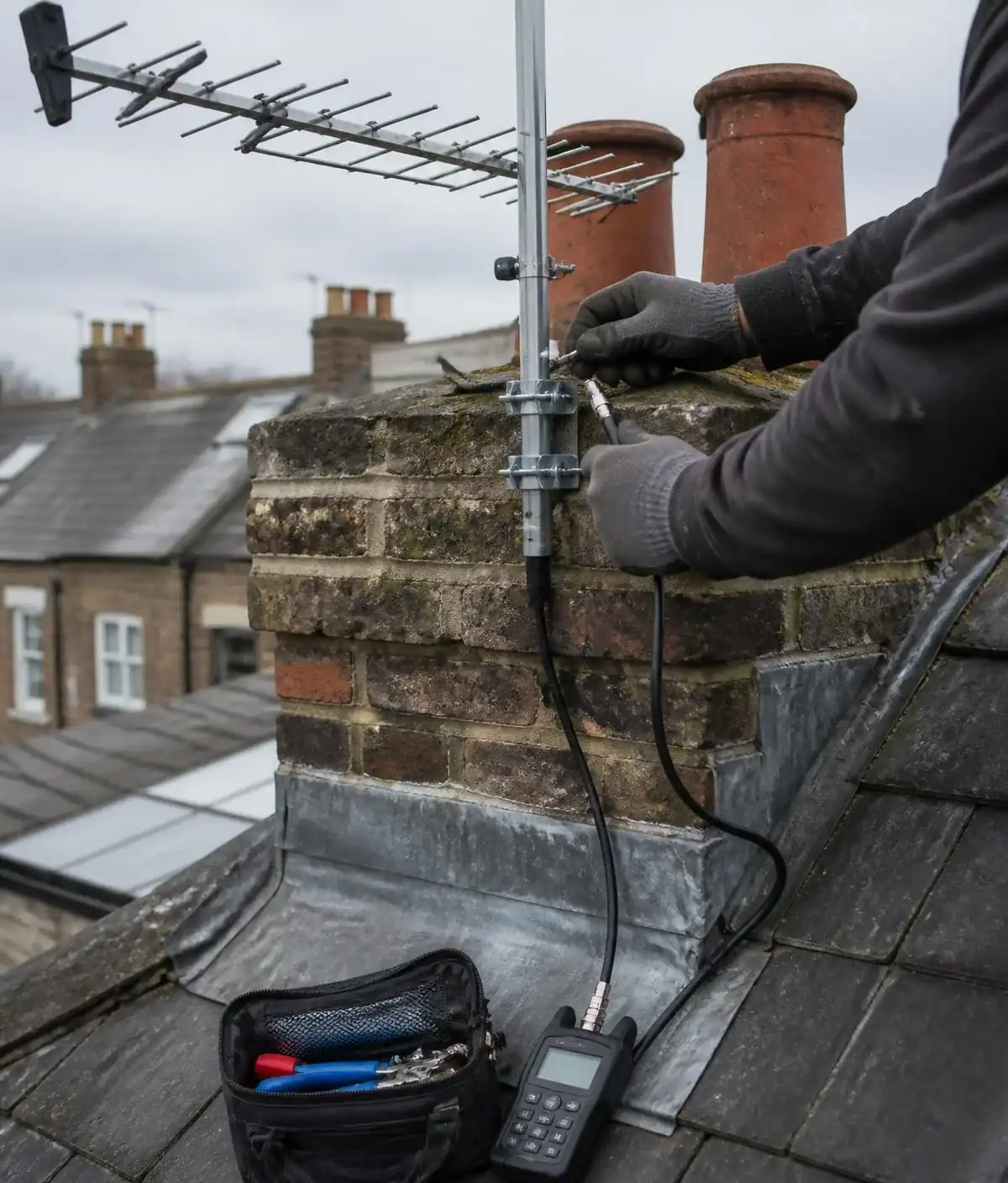
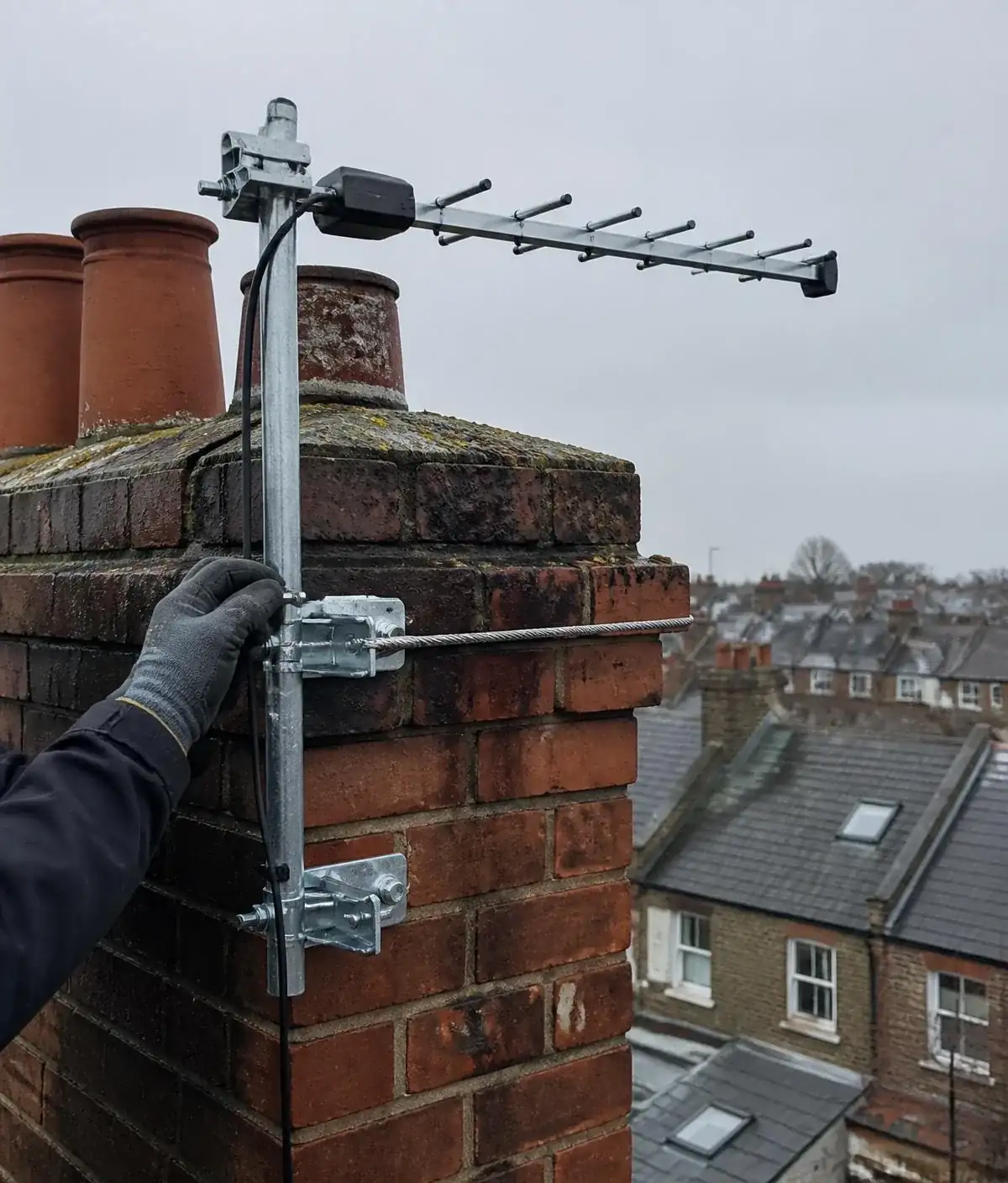
What careful roof work looks like in Kilburn
Streets and pockets we work in
Familiar ground in Kilburn
- Kilburn High Road
- Willesden Lane
- Brondesbury Road
- Christchurch Avenue
- Shoot Up Hill
- Kilburn Park Road
- Mapesbury Road
- Cavendish Road
Aerial repairs and everything else we do here
Aerial repairs
Storm damage, snapped elements, sagging poles and corroded connections put right.
Satellite repairs
No signal, rain fade and failed LNBs traced and repaired on the first visit.
TV signal problems
Pixelation, missing channels and picture that drops at the same time each evening.
TV aerial installation
New wideband or high-gain aerials sited for a clean Crystal Palace signal.
Extra TV points
New aerial or satellite outlets in bedrooms, kitchens, lofts and garden rooms.
Satellite dish installation
New dishes aligned on a meter, from single feeds to multi-room quad LNBs.
Foreign language satellite
European, Arabic, Turkish, Asian and Polish satellite systems installed and aligned.
TV wall mounting
Televisions mounted level and secure, with cables hidden inside the wall.
Home WiFi installation
Dead spots surveyed and fixed properly, not papered over with plug-in extenders.
CCTV installation & repair
CCTV repairs, camera and recorder faults fixed, plus new systems positioned for useful footage.
Smart home in Kilburn
Smart home security
Cameras, alarms, intercom and door access working together, viewable from anywhere.
Whole-home control
Lighting, blinds, heating, music, TV and security on one app and one set of keypads.
Roofs, streets and reception in Kilburn
What Kilburn property means for your aerial
Kilburn High Road runs almost dead straight through the middle of the area, lined with parades of shops with mansion flats stacked two or three storeys above, while the side streets — Christchurch Avenue, Mapesbury Road, Cavendish Road — carry mainly bay-fronted Victorian terraces, many split into flats years ago. Aerials here point south-east towards Crystal Palace across a fairly open path for most of the borough, though the taller mansion blocks along the High Road and around Kilburn Park Road throw shadow onto the roofs immediately behind them, which is why two houses on the same street can need different aerial gain. Brick stock is mostly London stock brick with a fair number of rendered or part-tiled front elevations, and chimney stacks on the older terraces are generally still sound enough to carry a bracket, though some have been reduced or capped when gas heating replaced coal fires.
The stretch of mansion flats above the shops on Kilburn High Road almost always has a shared aerial system feeding the building, installed whenever the block was last refurbished, and by now a good number of those systems are getting on and starting to show it — one flat losing picture while the rest are fine, or the whole run degrading together as an ageing amplifier drifts out of spec. We test at the head end on the roof first, because chasing a fault flat by flat when the actual cause sits in a loft cupboard or on the parapet wastes everyone's time and money, and a written report to the managing agent showing where the readings fail gets the right repair authorised rather than a guess.
On the terraced side streets, chimney stacks are the default mounting point and most are structurally fine, though a fair few have been repointed only on the street-facing side, leaving the aerial side softer than it looks from the pavement — worth checking before adding a new bracket rather than assuming the existing lashing kit will hold. Where a house has been converted into two or three flats, which is common off Willesden Lane and Shoot Up Hill, the original single feed has often been split with passive splitters to serve every flat, which is the single most common cause of a poor picture in one flat while the others are fine. Replacing that with a small distribution amplifier at the point the cable enters the building, rather than another splitter, is usually the fix.
Satellite dishes for Sky and freesat need a clear line south-south-east towards 28.2 degrees east, and on the High Road that generally means a rear or side wall rather than the shopfront elevation, which is often obstructed by neighbouring buildings or simply not practical to drill into. For the area's Irish, Caribbean and Eastern European households wanting language channels from 13 degrees east or other satellites further round the arc, we check both sightlines before quoting, since a position that works for Sky doesn't always clear buildings further round to the east — a motorised dish or a second fixed dish is sometimes the only answer on a tightly built terrace.
Aerial repairs we do most in Kilburn
Kilburn faults and what actually causes them
One flat in a converted terrace losing picture while others are fine
an ageing passive splitter feeding too many outlets from one weak point
Freezing in flats above shops at particular times of day
electrical interference from shop equipment on the same building or next door
Gradual picture loss across a whole mansion block
a communal amplifier drifting out of tolerance as it ages
Aerial bracket working loose after a few years
lashing fixed into a repointed but hollow section of an older chimney stack
Dish signal loss on damp or windy days only
a loose F-connector at the LNB letting moisture into the cable end
Installation notes for Kilburn
- Head-end testing on mansion block roofs before any flat-level work is authorised, so agents pay for the actual fault
- Distribution amplifiers rather than extra splitters when a converted terrace feeds several flats from one aerial
- Rear or side elevations preferred for dishes along the High Road, since shopfronts rarely give a clear path
- Lashing kit fixings checked against the actual condition of the brick or stack, not just its street-facing appearance
- Second dish or motorised mount considered where both Sky and an eastern-arc satellite are wanted from a tight plot
Kilburn questions
Kilburn answers, not call-centre scripts
My flat is above a shop and the picture keeps freezing. Why?
Very likely impulse interference from equipment below. Screened cable, filtering and correct signal levels normally clear it.
Who is responsible for the communal aerial?
The freeholder or managing agent. We can test it, report the findings, and deal with them directly once you put us in touch.
Do you cover both sides of the High Road?
Yes — NW6 either side, plus the roads running toward Willesden and Brondesbury.
My flat is above a shop on the High Road and the picture freezes most evenings — is that my aerial?
It's more often interference from equipment in the shop below or next door than a fault with the aerial itself, since it tends to happen at predictable times when machinery or lighting switches on. We measure signal quality rather than just strength to confirm the source, and the fix is usually filtering or re-routing the cable rather than replacing the aerial.
The building has a shared aerial system — who's responsible for fixing it?
Normally the freeholder or managing agent for anything up to and including the head-end equipment on the roof, with individual flats responsible for their own internal wiring and outlets. We can test the whole run and provide a report that makes clear where the fault actually sits, which speeds up getting the right party to authorise repair.
Can I get a dish for foreign-language channels as well as Sky in a Kilburn terrace?
Usually yes, though the two often need different sightlines, so we check both before fitting anything. Where the plot is tight and one clear position can't cover both, a second fixed dish or a motorised system that moves across the arc is the practical route.
Is my Victorian chimney still safe to mount an aerial on?
Most are, but stacks that have had partial repointing or reduction over the years aren't always as sound as they look from street level. We check the stack close up before fixing a bracket and will recommend a wall or loft mount instead if there's any doubt.
Nearby areas
We cover the same streets for security work too — CCTV repairs and installation in Kilburn.
Free advice, no obligation
Describe the fault. We'll tell you what your Kilburn aerial needs.
Speak to an engineer on WhatsApp — Mon–Sat 8am–8pm, Sun 9am–5pm. We cover North & North West London and most jobs are finished in a single visit.